


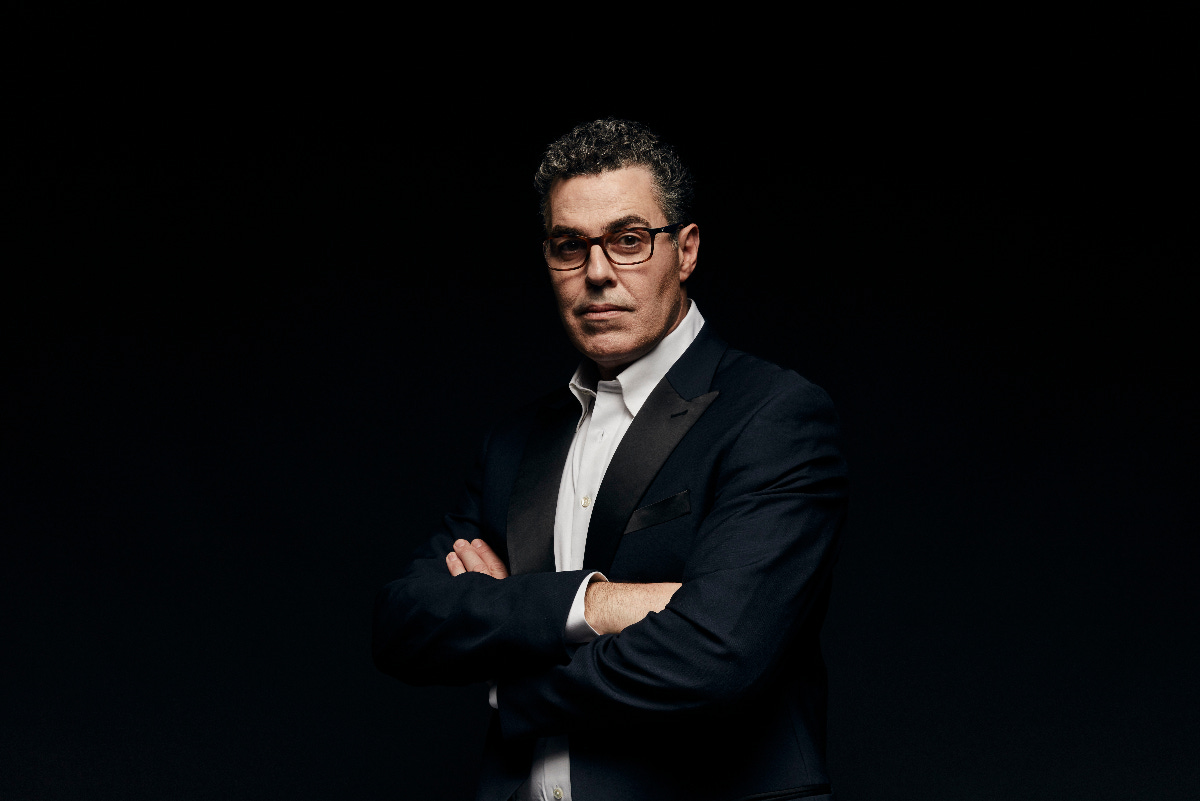
One of the most enduring voices in radio, Adam’s illustrious career spans decades. From hosting Loveline alongside Dr Drew Pinsky to co-chairing The Man Show with Jimmy Kimmel and co-creating cult TV hit Crank Yankers, Adam has been an omnipresent figure in sardonic, irreverent American comedy. In 2011, Guinness recognised The Adam Carolla Show as the most downloaded podcast in the world. Today, he continues to host his eponymous show.
Why did we invite him on?
Beyond being a hilarious and talented broadcaster, Adam is a remarkably insightful, no-nonsense thinker. His plain-spoken, unfiltered style, applied to tackling the most consequential stories of our time, has earned him a legion of fans. Us included.
We’ve had Adam on the show twice before, most recently last year, when we invited him to reflect on the then-recent US election. A free-wheeling discussion about ‘race hustlers’, comedy, and the American psyche, it went on to be one of our most popular interviews ever. As of writing, the video sits at 1.7M views on YouTube.
One of our favourite returning guests, it would have felt wrong to make the trip across the Atlantic and not catch up. Besides, we had a lot to talk about.
What happened?
”I thought there would be less agitation the second time around. I thought there would be familiarity, and that [the left] would just be tired. I didn’t think they’d ratchet it up.”
Trump’s critics have never won points of conspicuousness. But in the wake of his second victory (depending on who you ask), the opposition seemed strangely quiet - defeated, almost. After a decade of fighting, they were forced to resign themselves to the grim truth: this is America, and this is what it wants. Now’s not a time to upend, but reflect.
It didn’t last long.
Soon, the oh-so-typical waves of protest started up again, this time in response to the Trump-approved ICE raids sweeping the nation. The images were shocking: demonstrators locking horns with law enforcement against walls of black smoke and tear gas. No state suffered more Adam’s: California. A lifelong citizen, Adam finds himself on the precipice of jumping ship.
”California is a hot blonde that never had to study. There was always someone calling her, buying her dinner, buying her drinks. The other states… they had to study, they had to work. They had to make themselves attractive. And at some point, the blonde turns 45, and there’s not a date every Saturday night. That’s what California is - a really attractive woman that’s ageing out. And now she has to get a law degree. The ride’s over.”
Many Americans saw the photos coming out of the Golden State and feared theirs was next. Adam had a different reaction: bafflement.
”I don’t know where this energy comes from. Spending your Saturday holding up a cardboard sign, screaming in people’s faces. Over what? Trump building a ballroom? I don’t care! Why is there so much energy over nothing? Do we need to pour all of our energy and intensity into everything all the time? Having kids prevents you from dressing up in an inflatable Snoopy outfit and punching an ICE agent. You have a witness to your life, and it engages you. You start to wonder: ‘Do you want your kids doing something like that in their 40s?’”
One thing’s for sure: it’s not the behaviour of a happy civilisation. Fulfilled and busy citizens typically don’t spend their free time fighting the cops. Perhaps that’s the whole point. If you go to a protest, no longer are you a bored (and boring) cog in the machine - you’re a revolutionary.
”I’ve always thought this was all about projects, being engaged, working with your hands, having lots to deal with it… ‘The devil makes work for idle hands.’ The guys who crafted those adages knew what they were talking about.”
But people have always been bored. In fact, we’ve never had more means to avoid it. All forms of entertainment are readily available in the hands of all people at all times.
This, to Adam, isn’t a paradox.
It’s the cause.
We’ve amused ourselves into misery. We’ve abstracted our lives away from what it means to be human, and we’re paying the price.
For almost our entire history, we have worked with our hands. It was an unavoidable part of not just life, but survival. Now, vanishingly few still do. Hands that once butchered kills, pulled up produce, and assembled makeshift shelters now scroll through spreadsheets, punch up emails, and organise remote meetings.
Konstantin makes reference to Desmond Morris’ influential book The Human Zoo, in which Morris drew parallels between the behaviour and psychology of people in citizens to that of animals in captivity. Adam agrees, and goes further.
”What we’re doing is an experiment on humans. You take a killer whale, put him in SeaWorld , and he becomes depressed. And we get it! This is a majestic creature, he’s supposed to be swimming the world’s oceans, hunting fish, and now he’s stuck with a lesbian, swimming in a circle. The people who protest zoos because it’s not the healthy environment for the animals.. they live in 15-minute cities and stack themselves on top of each other."
But it’s not just the city-dwellers who suffer in modernity - it’s all of us. The human race, at scale, is sacrificing its deep-rooted connection to the past in favour of convenience and comfort.
”Everyone says, ‘Oh, we’re not meant to doomscroll on our phones all day.’ I don’t think we’re supposed to be inside, on our phones, with air conditioning. Forget the phone! We’re supposed to be out, y’know, swinging an axe, tilting a barn, moving, on our feet, sweating. We’re not supposed to be inside crunching data all day, and there’s a cost to that.”
And what is that cost?
