


What is happiness?
For as much as we dedicate our lives to it, the answer is unclear. It is elusive by nature; look directly at it, and it ceases to be.
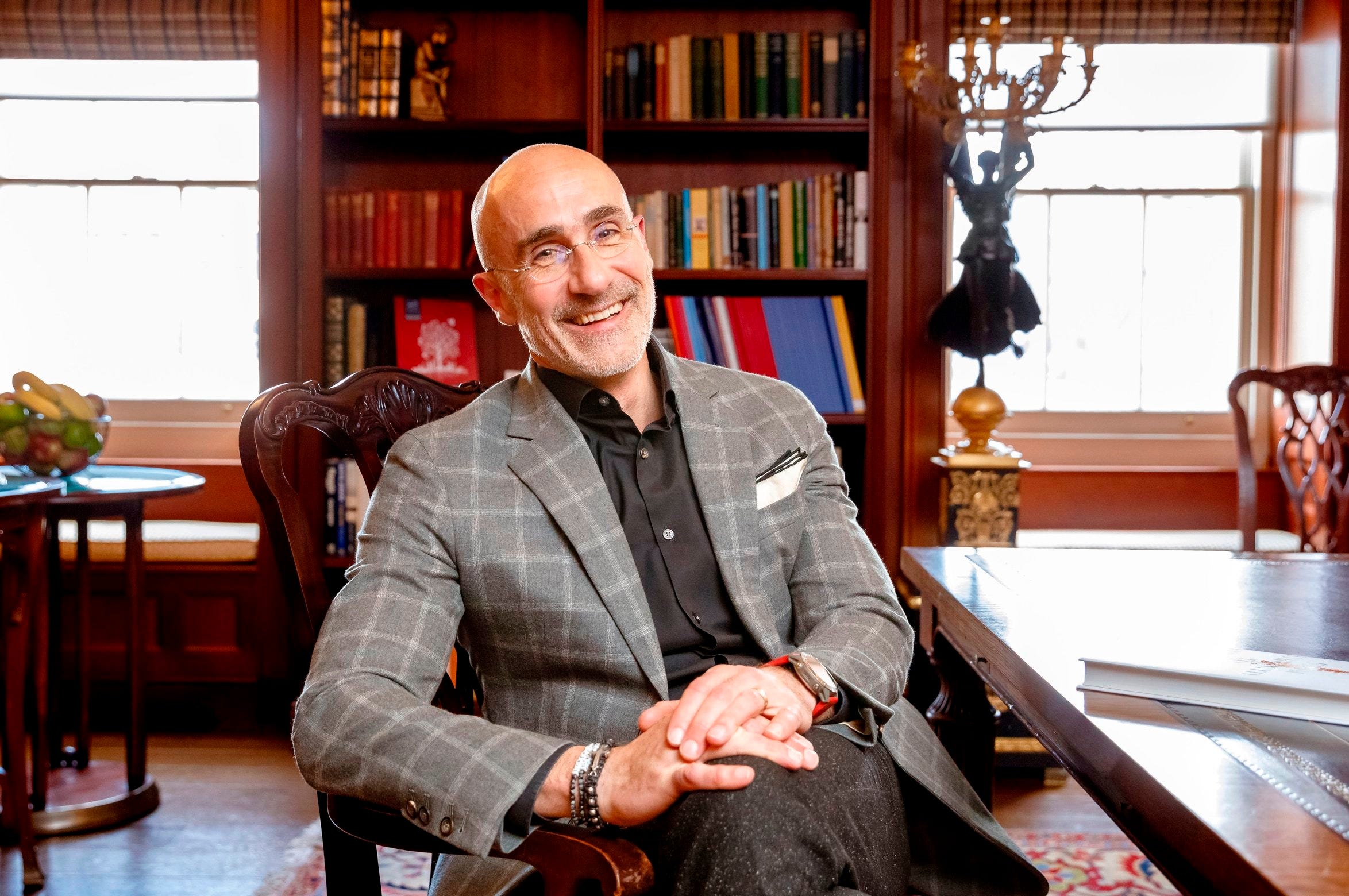
It’s a problem that Arthur C. Books has dedicated his career to solving.
Returning to academia in the late ‘90s after a career in classical music, Arthur has explored the subject of contentment at several of America’s most prestigious higher-education centres, including Harvard Business School - where he continues to lecture today. Since the turn of the millennium, he has authored and co-authored a dozen books - including 2023’s Build The Life You Want, sharing credit with Oprah Winfrey. His latest - The Meaning Of Your Life: Finding Purpose In An Age of Emptiness - was published earlier this year.
Why did we invite him on?
However you define ‘happy’, one thing is inarguable: most people are not it. Much has been made of the 21st century’s “crisis of meaning” - a post-industrial condition whereby ordinary people, separated from the pursuit of their base needs and simultaneously locked out of adventure, are left scrambling for purpose.
That crisis manifests in ugly ways. Violence, sectarianism, and suicide, to name just a few. If human beings could find meaning in escaping it, perhaps the problem would solve itself.
But how?
That’s what we wanted to know, and Arthur seemed like precisely the person to ask.
What did we learn?
Before we can explore what happiness, it’s wise to identify what it isn’t. To Arthur, people often mistake it for lower-value goods. Some view it as nothing more than ‘pleasure’. This, he argues, is the root of all misunderstanding.
”Happiness is not a pursuit of pleasure. The pursuit of pleasure does not lead to happiness; it leads to rehab.”
Perhaps happiness isn’t the presence of something good, but the absence of something bad. Life is defined by suffering - grief, fear, stress, death - and maybe what we call ‘happiness’ is best understood as a temporary escape from these pressures. Is that closer to the truth?
Still no.
”Negative emotions and experiences are behind your survival. And yet, people don’t want them. That’s the conflict - they want something they know they can’t have. Happiness isn’t the absence of negative emotion … it’s a combination of enjoyment, satisfaction and meaning. Those are the macronutrients. Don’t pursue ‘happiness’, pursue those three things, and happiness will find you.”
”Enjoyment, satisfaction, and meaning.” It’s a helpful framework, but are these terms any more easily defined than ‘happiness’. To test his hypothesis, we ask Arthur to break them down one by one.
”Enjoyment is the engagement of pleasurable things under the right circumstances … If you’re in Vegas at 4 in the morning, pulling the [slot machine arm] again and again, we’ll need to talk. But if you’re sat at the blackjack table, prudently gambling with money you can afford to lose, and surrounded by your best friends? That’s enjoyment.”
That’s straightforward enough, and difficult to argue with. Noble sacrifice might be admirable, but without any pleasure at all, it’s hard to call that ‘happiness’. What about satisfaction?
”Satisfaction is very paradoxical - it’s the enjoyment of an achievement reached through struggle. Only homo sapiens want pain; if you don’t have to give something up to achieve something else, you’ll get no sweetness from it. If a student cheats on an exam, they’ll get no satisfaction from their A. But this is where it gets weird…”
Here, Arthur explains something we all know, but rarely recognise. Have you ever noticed that the elation you feel after the attainment of a long-fought goal never sticks around? Have you wondered why? It’s because hardwired into the human brain is an evolutionary trap that keeps us from achieving long-term satisfaction but protects us from knowing that we won’t achieve it.
”There’s something called ‘the arrival fallacy’. It’s the idea that, because it was fun to make progress towards something challenging, the goal will be bliss. It never is. When people win an Olympic gold model, they fall into a clinical depression. Your emotions don’t work to put you in a permanently good mood, and we know that, but Mother Nature wants you fooled again and again and again so we stay in the hunt.”
With ‘enjoyment’ and ‘satisfaction’ now clearly defined, we can move on to the most challenging of the triumvirate - meaning. Everyone knows what enjoyment feels like, and the same is true for satisfaction. There will be a large number of people out there who have no personal experience of ‘meaning’ as it’s often described. So, how can we identify it?
