


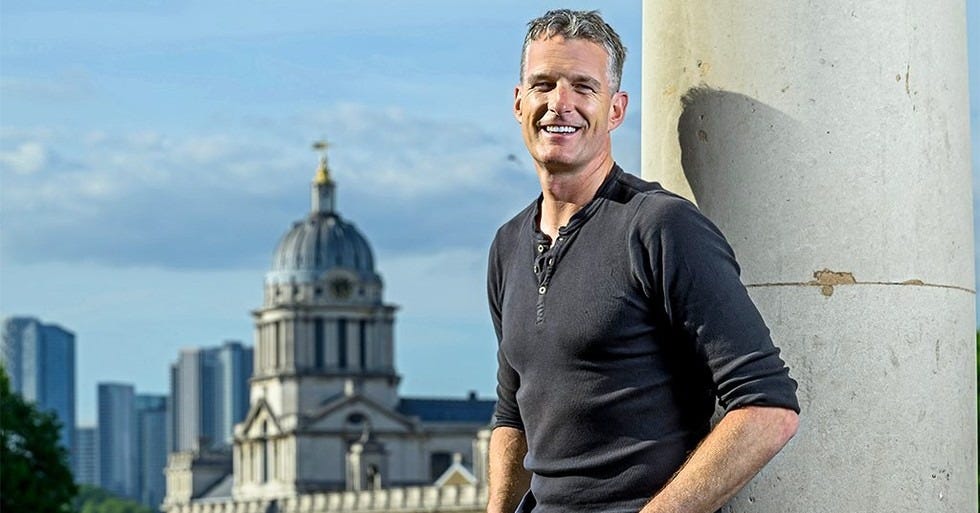
Dan Snow is one of the most revered popular historians in Britain. In 2002, Dan came onto the scene with his acclaimed BBC documentary El Alamein, charting the events of the Second World War battle for its 60th anniversary. In every year since, he has released several popular history programmes, covering everything from Rome to China, the Vikings to the Nazis, and the history of Britain. He is also an ambassador of the Electoral Reform Society. His latest show - a one-off special: The Odyssey with Dan Snow - premiered on Channel Five last month.
Why did we invite him?
Just shy of a year ago, we had Dan on the show to give an overview of the ‘True History of England’. It remains one of our favourite interviews ever, and it looks like you agreed; at the time of writing, it boasts nearly a million views on YouTube - a number eclipsed when you account for downloads.
Ten minutes from the end, Dan said: “We’re getting to the best bit.” By that, he meant the Industrial Revolution. Having to cut him off before we could explore that was torturous for us, and something we insisted on remedying as quickly as possible.
Ten months later, we have him back to do precisely that.
What did we learn?
”It’s one of the most exciting stories in the whole of human history. A little island off the coast of Eurasia, for thousands of years, it does very little. Then, around 1700-1750, it goes mental. It builds the largest empire the world has ever seen. Roughly a quarter of the world’s area and population is under the control of a tiny island in the North Sea. Why?”
Why indeed. England’s outsized influence over the world remains one of the most puzzling facts of its history. Its music, literature, theatre, films, architecture, practices and norms are present in almost every corner of the planet; even in ones they never outright controlled. What was it about this ‘little island’ that meant it was able to have such a seismic impact?
”At the time, the argument was that ‘God is an Englishman’. But the truth is much more interesting. Why do you get these explosions of creativity? Or naval might? Why does it happen? And how can you replicate it?”
Some things can only happen once. It’s a miracle they ever happened at all. Understanding that about British history, it’s easy to dismiss what happened as a freak event. But that undersells the factors that profoundly contributed to the ‘fate’ of the nation and the ones it controlled, or even just inspired.
There are countless we can explore, but Dan starts with the key cultural difference between Europe and its rivals in the Far East.
”Europe is incredibly competitive. If you have an invention in Nanking [in China] and the emperor doesn’t like it, that’s the end of your invention. If you have an invention and the king doesn’t like it, you can be in another country in two days.”
Going further, our guest explains how innovation, Columbus, the achievements of English explorers, conflict with France, gain and loss of the United States, and even the natural weather patterns around the isle, lay the ground for what would be true catalyst: industry.
”Historians really argue whether empire and industry are distinct or linked. I think they are linked. As Britain pushes ahead with its trade and overseas power projection, things start happening at home. The desire to build better ships means embracing science; you’re constantly thinking about how to improve them, and navigate more effectively. There are so many breakthroughs in this time.”
Another crucial feature was the advent of capitalism. Quite unlike the myth often told, capitalism was not an enslaving practice - it was a liberating one. Adam Smith, forefather of the model, made the case that a system in which willing workers are compensated by their boss is not only more ethical than slavery, but also more economically sound.
Here, Dan cuts against the established narrative that all of the West’s wealth and prosperity was built on the slave trade; it wasn’t until after it ended that these countries entered the truest phase of affluence.
”[Smith] made the case that capitalism would save everyone money, even the slave owners. The cost of policing this institution was more than it earned back; by paying them a wage, they fostered an economy.”
These days, the story goes that Britain was a uniquely cruel and barbarous coloniser. One with a history to be deeply ashamed of. There are doubtlessly aspects that make one wince, that make patriotism more difficult. Are we right to feel that way?
”The past was a monstrous, unimaginably brutal place. What do we do about that?”
