


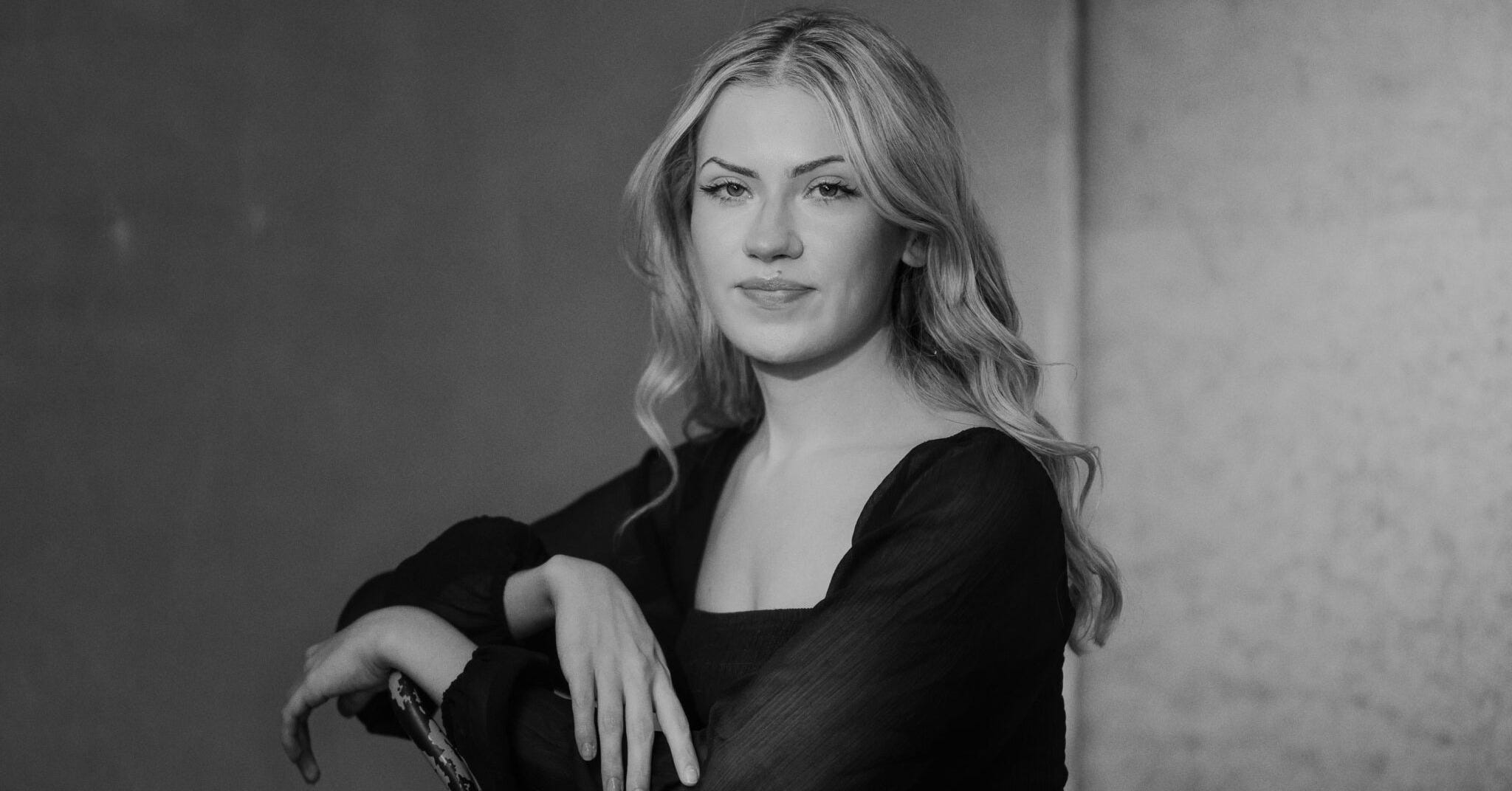
Freya India is one of the most distinct young writers working today. Exploring the interior lives and modern challenges of young women in the age of atomisation, her Substack, GIRLS, is one of the most popular in Britain, boasting over 50,000 subscribers. She is a staff writer for Jonathan Haidt’s newsletter After Babel, and has also contributed to the likes of The New Statesman, The Spectator, and The Free Press. Her first book, Girls®: Gen Z & The Commodification of Everything, is out this Thursday - 26th February 2026.
Why did we invite her on?
The subject of Gen-Z alienation is nothing new, but few voices speak from first-hand experience. Freya came of age in the era during the transition of social media from a frivolous pastime to an all-consuming, all-conforming enslavement-tech. The damage these platforms have done (and are doing) to our youth cannot be overstated, and Freya is one of its fiercest critics.
She’s been covering the subject for years, but with the release of her new book, it seemed the perfect opportunity to have her back.
However bad you may think things are, rest assured - they are worse.
What did we talk about?
”Something has broken down. The internet offers us simulations, but my generation doesn’t realise that’s all they are. They think Instagram is a community because they’ve never talked to their neighbours. Instead of having friends, they have influencers and forums. They don’t realise these are a replacement for something.”
It would take a streak of hypocrisy for us to condemn social media entirely.
After all, our show wouldn’t be possible without it.
Like all paradigm shifts in society, social media came with drawbacks. The best case study is Gen-Z. Their uncertainty of self, their anxieties, and their inability to ‘grow up’ are things this cohort are so often mocked for that we rarely stop to ask ‘Why?’ Why are they like this?
It’s a holistic disease. For those in the dark, Freya identifies the central symptom.
”Technology has turned Gen-Z women into products. We’re not treating ourselves as human.”
So, how did this happen?
On the parallel tracks of technology and entertainment, social media is the last stop before dystopia. Generations gone by had television, radio and newspapers, yet they didn’t suffer the same degeneration of self.
It wasn’t possible yet. These medias had no real knowledge of their users. Advertising serves and preys upon the innermost fears of consumers. Marketers of yesteryear could only dream of the power that complex, deified algorithms afford them now. They know what you buy, what you care about, and what you’re scared of. By clocking your phone-use, they know what keeps you up at night.
The shift is so radical and profound that it rattled not only how women saw the world, but how they see themselves. In a way, that’s correct; the apps know them better than they do.
”These are age-old anxieties that women have always felt. How you look, how you live… But now they’ve been magnified and exploited by companies, and they’ve become unmanageable. The core experience of girls today is commodification. [In the past], women were sold products and procedures. Now, we are the products.”
These are ancient stresses. Insecurities and shortcomings are a fact of life, but these were always things young women could handle themselves. That’s no longer true. They’ve mutated into something we no longer recognise. Age-old guidance cannot surmount the problems these girls face.
”In the past, someone might make a comment at school and you’d ruminate on it. But now, you can go back to it, and it’s public, and it’s inescapable … The reputational destruction that used to happen on the playground is now happening online, and it’s being shown to other children.”
Not everyone is so sympathetic. After all, what have these companies really done wrong? They’re supplying a demand, what’s wrong with that? If these young girls are so vexed by their phones, can’t they just turnthem off? Feel better by smashing it into pieces.
This, Freya argues, is a misframing. The girls are not extracting from the algorithms - the algorithms are taking from them. They don’t stand a chance.
”How does a young girl compete with a billion-dollar industry who take advantage of all her vulnerabilities? The algorithms pick up on fear and vulnerability. They pick up on your searches and prey on it. If you delete a selfie, they’ll send you an ad for a beauty product. They can identify any insecurity you have and profit from it.”
As much as Freya’s age situates her at the epicentre of Gen-Z, she considers herself lucky to have avoided the worst of it. Others were exposed younger, and to more harmful content. For entire cohorts of youth, degrading pornography and wartime snuff films became their ‘Saturday morning cartoons’. It’s a recipe for disharmony.
“I got a phone at 11. It wasn’t as bad for me, but if you’re young now, you’re getting fed all the rage in the world without having experienced the world at all … It’s a very confusing time. Shows for adults are infantilised while shows for children are sexualised. There’s a hustle culture online, paired with helicopter parenting in the real world.”
Unlike entertainment sources of the previous century, platforms demand participation. Not only are you being fed violence, sex and propagand, you’re expected to have a view and make it known. After all, silence is violence.
Mistakes are inevitable. In the past, young people finding themselves might be afforded the grace of memory: a select few might remember your transgressions, but they’ll know you better than to judge you for them.
Today, things can’t disappear. Every embarrassment, mishandling, and every ill-advised comment is documented. It’s a lode-bearing pillar for cancel culture, and while celebrities were the targets we talked about, the private citizen faced their own kind of social shame. Freya calls it what it is…
