


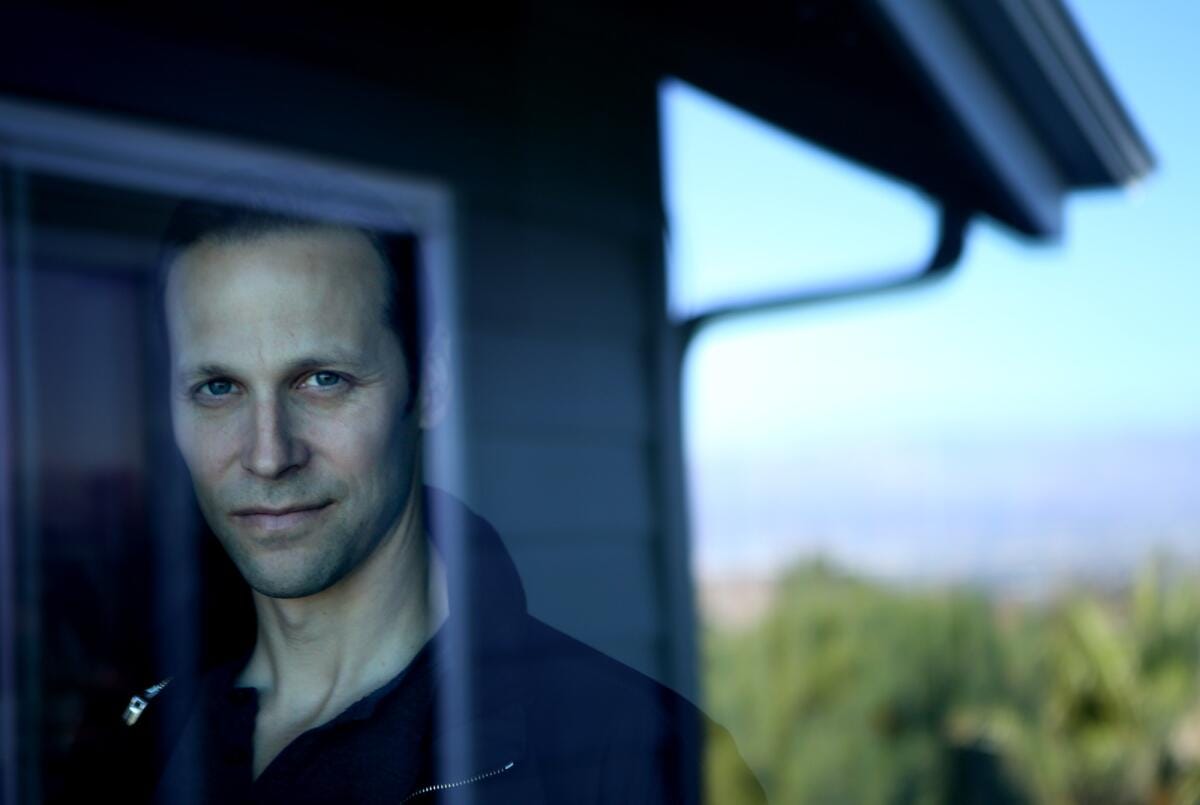
Few writers can boast a resume as diverse as Gregg Hurwitz’s. After studying at Harvard under Jordan Peterson, Gregg published his first book - The Tower - in 1999 at the age of 25. At the turn of the 2010s, Gregg leant his talented hand to the field of comic books. He has since written for some of DC and Marvel’s most prestigious characters, including Batman, Wolverine and X-Men. 2017 saw the release of his first screen-written feature, The Book Of Henry. In the last decade, his career has been defined by his original thriller series: Orphan X. The 11th instalment - Antihero - releases next month.
Why did we invite him on?
Gregg’s work isn’t, on the face of it, political. Aside from writing the TV adaptation for the 2016 Pulitzer Prize-winning Black Flags: The Rise Of ISIS, much of his canon uses sociopolitics as a framing for thrilling stories, not as a means to explore it.
Yet, behind the scenes, Gregg is one of the most perceptive thinkers outside of traditional political analysis. With the world as frayed and unpredictable as it’s ever been, we wanted to see what he makes of it all.
In particular, we wanted to explore something we haven’t touched upon on the show, and an area of research that Gregg has immersed himself over the last 10 years.
‘Assassination culture’.
We find ourselves in a terrifying place, as the premeditated murder of politicians and pundits has become disturbingly commonplace. We wanted to learn why: the divisions that bring it about, the definining characteristics, and - crucially - how to stop it.
What did we talk about?
”The real lines are not red or blue; it’s psychopaths vs. everyone else.”
Gregg always had an interest in psychology and politics. But the two didn’t become so intertwined, in his mind, until the turn of the 2010s. The woke era - a phase we can mostly observe in the rear view mirror now - revealed the dark side of leftist politics. Out of nowhere, a wing of political thinking mutated into a vicious, vindictive new ideology that stood against the most principled and appealling values of the left. When that change came into view, Gregg knew an equal-and-opposite response was due.
”I know a psyop when I see one. I know a persuasion technique when I see it. When I saw the language controls on the left, I knew it would lead to a resentful populist tide.”
All it needed was a catalyst. That catalyst came on September 11th of last year, when Charlie Kirk was killed in broad daylight and cold blood.
Like many of us, Gregg was profoundly rattled by the news. Charlie was no fringe radical, and he wasn’t calling for violence. He wasn’t even a politician. He was a civilian, and he wanted to have a conversation. He called for understanding, and was killed for it.
”Charlie was the face of a movement, and argued more convincingly and beautifully for a ton of values. A free market of ideas, including different kinds of people in the conservative movement… he was a bullwark for that. And these people think you can get rid of him and replace him with a leftist? I didn’t know Charlie, but there are a lot of friends of mine who could have been in that chair.”
In the days and weeks following his murder, waves of touching tributes rolled in from all corners of politics. But not everyone was so flattering. A certain sector of the terminally-online left took the opportunity to celebrate Charlie’s death. Left-wing X-alternative Bluesky lit up with posts about how he had it coming, some even going as far as to request the assassination of other ‘heretics’.
To Gregg, it was a revealing moment; these people showed their true nature…
