


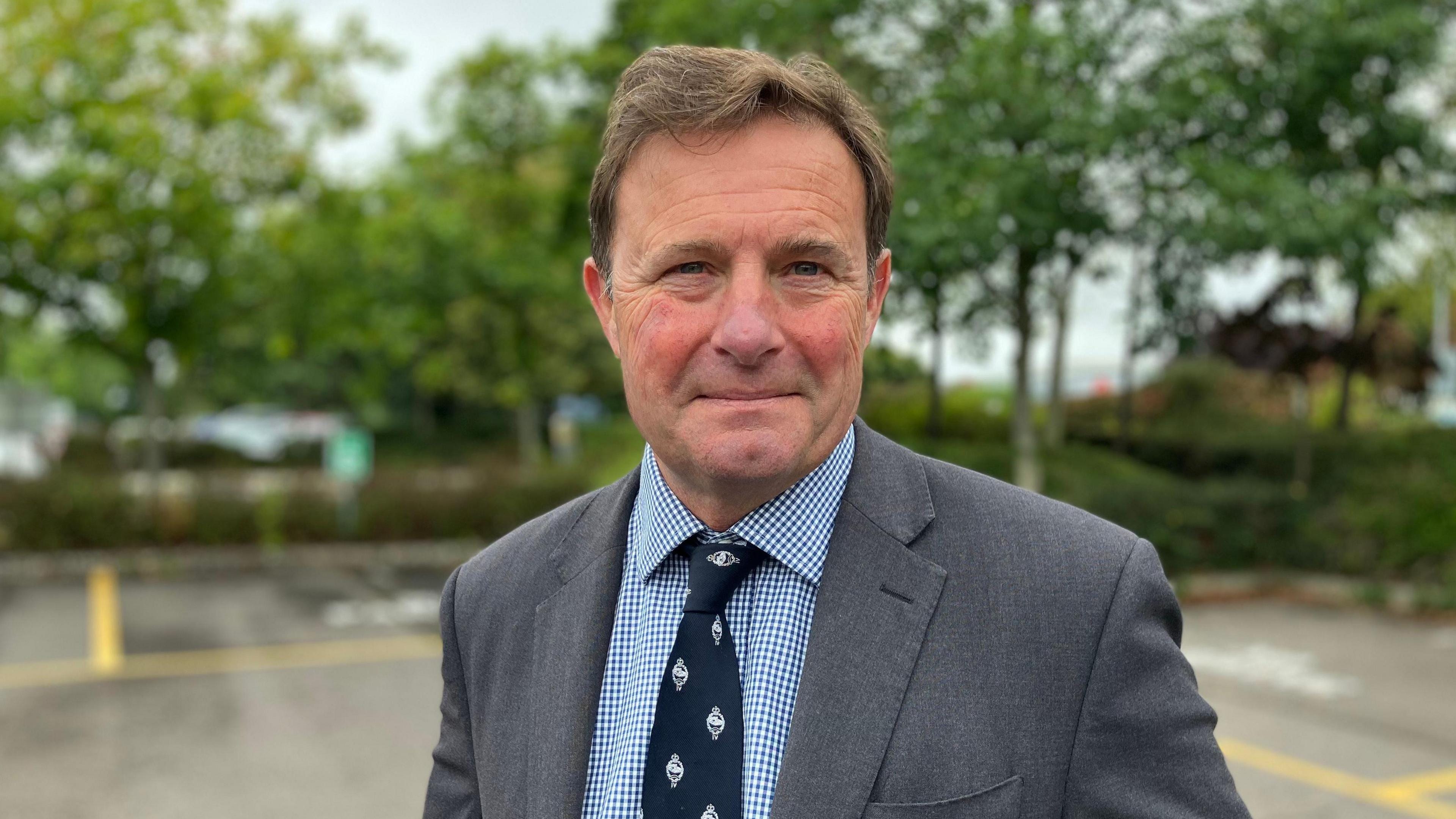
With approaching 40 years’ experience, Hamish de Bretton-Gordon is one of the eminent figures in his field - one which has only become increasingly significant.
For 23 of those years, he served in the British Army as an officer, reaching the rank of colonel (a position he held for 10), before leaving to advise the Union of Syrian Medical Charities. In his time in service, he saw action in the First Gulf War, Bosnia, Kosovo, Iraq, Afghanistan, and the Second Gulf War. As a commentator, he is published in the BBC, ABC, the Guardian, and the Daily Telegraph. In June, he published his latest book - Tank Command.
What did we learn?
This is a time of reawakening. While Britain is not at war yet, the 2020s have seen us reckon with that reality more than we have at any time since Iraq. Things are arguably worse now. In that case, it was a voluntary engagement; we might find we have no say in our next conflict.
”It was only when Putin invaded Ukraine in 2022 that we, as a country, realised: ‘Blimey, we don’t have a credible deterrent.’ At the moment, the British army, air force and navy are trying to recover from 40 years of disinvestment and poor morale. You can get there, and quickly, but it takes funding. We must give our men and women the right tools to do the job.”
For decades, the UK has depended on its bigger, badder, younger brother across the Atlantic. Under the watchful eye of the world’s most mighty military, we - and our European neighbours - have dropped our guard, safe in the knowledge that, should the worst come to pass, we have the golden goose on our side. Under Trump, that relationship is changing. No longer can we expect to free-ride on America’s good graces. To Hamish, this is no bad thing.
”I don’t agree with everything Trump does and says, but he has stirred up the Europeans. We realise now that we can’t just depend on the US - we must prepare our own military capabilities, so that when Putin - or whoever replaces him - looks West in the future, he sees a credible defence and doesn’t invade.”
But how did it come to this? Why did it take a renegade, China-shop-bull President like Trump to rattle our cages before we realised what we were facing? Why did we wait until Putin had already put boots on Ukrainian soil to consider our own safety?
To Hamish, the answer is simple: we didn’t take the threat seriously. We slacked off. We cut budgets, we lost interest. As we come nose-to-nose with reality, it’s clear how imbalanced things have become.
”Priorities for the government have changed. You hear every Prime Minister since Churchill say defence is the most important priority for our nation, but it’s not been since Churchill that we actually believed that. That’s an issue. A Russian soldier gets paid 80 grand a year; that’s at least twice what they get here. When we’re spending six-times as much on welfare as we are on defence, I feel we’ve got something wrong here.”
So, how bad is the problem really? Francis mentions one of Hamish’s articles, in which he revealed that the army was being underfunded to the tune of £28 billion. It sounds troubling, but as laymen, it’s hard to guess at what the material consequences of that shortfall are. What does that entail in real-world terms for our soldiers?
