


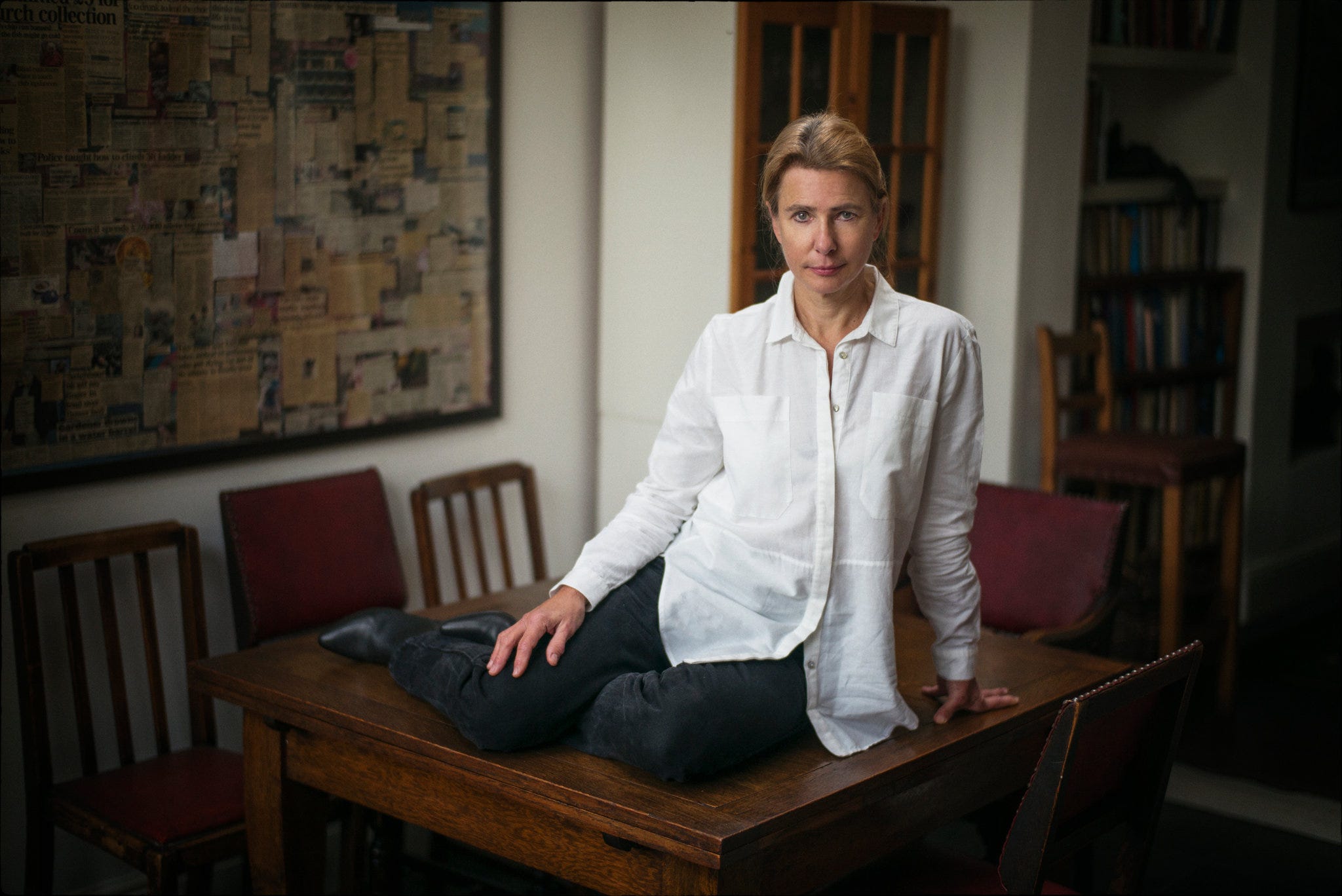
Few writers define the 21st century as comprehensively as Lionel Shriver.
Moreso than arguably any other, one can look through her catalogue and get a sense of where the public conversation was at its release. In 2003, she released the wildly popular We Need To Talk About Kevin (later adapted into the critically acclaimed film of the same name), a chilling post-Columbine exploration of psychology and youth violence that earned her the Orange Prize. The novel launched her into the consciousness of pop culture, a position that she’s maintained through decades of acclaimed best-sellers and acid-tongued writing.
This month, she released her latest novel: A Better Life.
Why did we invite her on?
On both sides of the Atlantic, immigration is the issue of the day. While ICE agents roll into American cities, British voters keep relocating to any party who promises to do more stop to the influx. It invites emotional reactions of all stripes - as much sympathy as there is, there is an equal (perhaps greater) measure of apathy, even hostility.
Lionel, always one to respond to the moment, has met it with a new book that balances and draws from both sides of the argument. We loved it, and we wanted to know what its writer makes of the situation. What does Lionel really think?
What did we learn?
”I am always looking for a gap in the cultural library. There is no point writing a book that’s been written multiple times, so I’m trying to write about something that other people are not writing about - there’s usually a reason.”
Immigration is the mother of all hot button issues right now. It dominates the news cycle, shapes the public conversation, and countless novelists have made contributions to the subject. Going to write hers, Lionel surveyed the lay of the land and noticed that something was amiss.
“There have been plenty of novels about immigration, and they’re almost always implicitly pro-immigrant - that’s the perspective they’re told from. And they’re not bad novels; the narrative of the immigrant’s story is naturally appealling … When you have a sympathetic immigrant, you are writing a pro-immigration book. That’s just the way it works.”
Recently, British billionaire Jim Ratcliffe said in an interview that the UK had been "colonised by migrants". For this, he was condemned by journalists, union leaders, anti-racism campaigners and politicians. Lionel, it won’t surprise you to know, had a view of her own. She agreed with Jim.
”Of course.”
Even if you agree with the notion of Ratcliffe’s comment, you can also see why it was so roundly criticised. At the very least, it’s technically inaccurate. ‘Invasion’ and ‘colonisation’ imply a violent capturing of the land - it implicitly blames the migrant population.
But who is really responsible for these waves of mass immigration? Is it not the fault of our leaders, rather than those who take the opportunity our leaders afford them?
Lionel agrees, going further.
”It is not inevitable. And politicians of a certain stripe have conditioned us to think it is. The US has been taught to believe that the drastic transformation of the country is a natural process like photosynthesis. The sun shines and the immigrants come. It’s as if nobody’s making any decisions that make rapid demographic change. But this is all the result of individual political decisions, and it’s the same in the UK. They’re being let in. They’re being invited.”
Many open-borders types are so caught up in their will to accomodate the migrant population, they are willing to sacrifice the society those people are fleeing to.
Reading Lionel’s new book, Francis found himself returning to a phrase coined by Gad Saad: ‘suicidal empathy’. A form of empathy that is destructive to the party exhibiting it.
Lionel sees Francis’ point, but takes issue with the term itself…
