


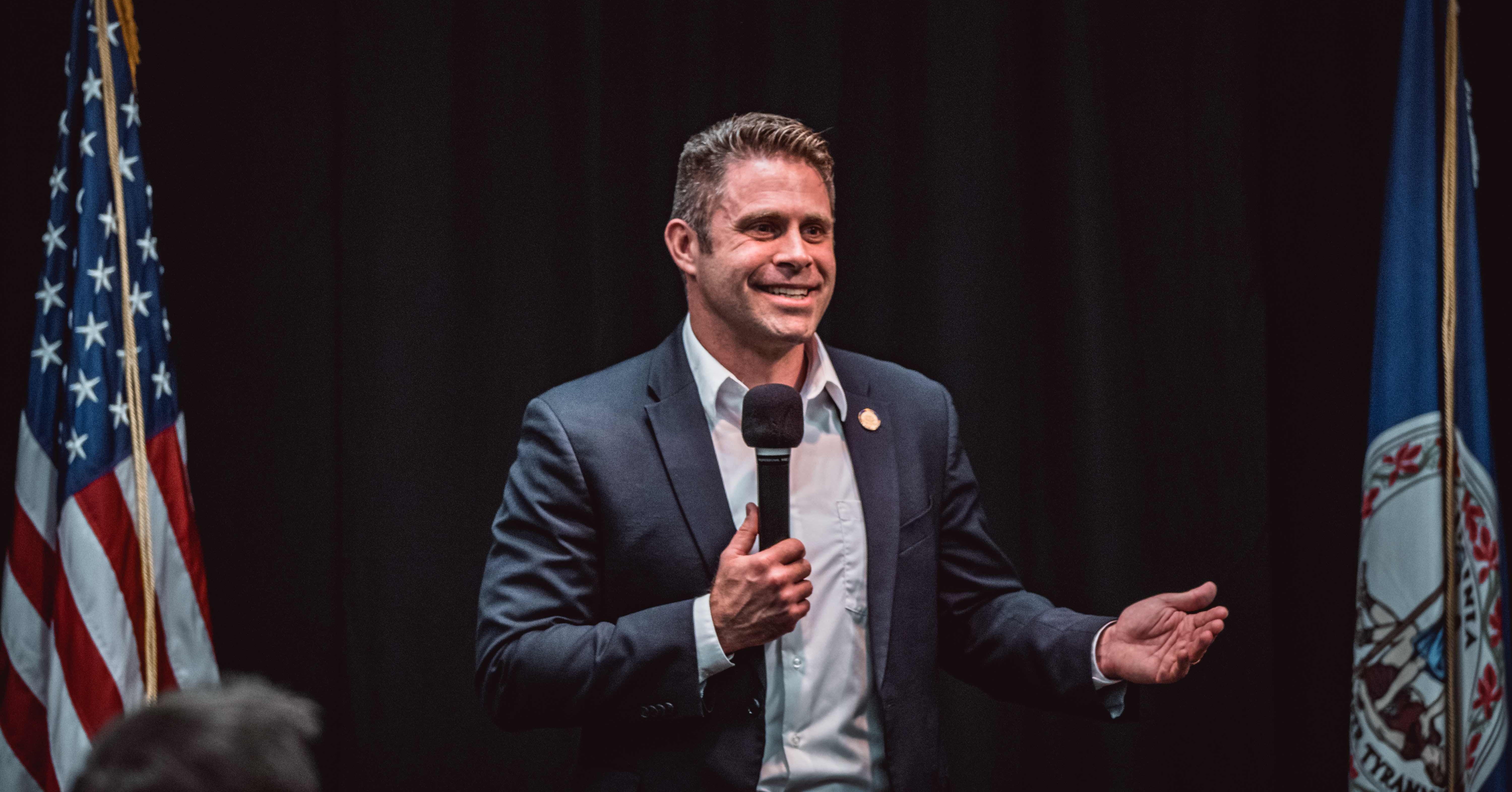
In the last few years, Nick has become one of the world’s most popular right-of-centre social media influencers. His hilarious, no-holds-barred videos have been viewed hundreds of millions of times and earned him over 3 million followers. Across the platforms, you can find Nick, in his trademark style, commenting on issues like masculinity, gun rights, raising kids, mass entertainment, and the battle of the sexes. He also hosts the popular Making The Argument podcast and The Why Minutes on YouTube. All the while, he’s been an active voice in the Republican Party. In 2015, Nick ran for the Virginia House of Delegates, taking office in January 2016, where he has remained ever since.
Why did we invite him on?
We hosted Nick for the first time last year, when he joined us to break down Israel’s war in Gaza. The interview was wildly popular, ranking among our favourites of that trip.
That was just shy of one year ago. Already, America is a very different place. Trump’s popularity has wavered, Israel’s has cratered, and the right has schismed wildly. Where does Nick find himself these days? What does he think of it all?
We also wanted to explore a subject that we only got to briefly touch on last time: the war on men. For years, Nick has been an outspoken advocate for young men, teaching millions how to assume their role in society. While woke ideology seems to be in a period of recession, the masculinity crisis still sits at the centre of the public conversation. What’s happening? And more importantly, how did we solve it?
What did we learn?
”I warned everyone that young men would revolt, and it wouldn’t be in the way they wanted them to - it was never going to be woke.”
For nearly a decade - and in some fields, to this day - men were demonised. Blamed for all social ills and excluded from all praise, half of the population was deemed responsible for all of the problems. Masculinity was the root of all evil, and even the ‘good ones’ were complicit.
Some claimed it was only ‘toxic masculinity’ that needed addressing. But when that label captures everything that we associate with being a man, it’s a distinction without a difference.
In Nick’s view, wokeness was never going to sell to young men. Its central tenets fundamentally run counter to their immutable characteristics.
”Nurture is important, but nature matters. It’s arrogant to presume we’ve somehow gotten past it. We’re several decades into the experiment. How has it worked out? Maybe the thousands of years of human nature that precede it have something to teach us. That used to be something that we just understood.”
The effect, however, has not been benign. When young men were pushed out of polite society, they didn’t disappear - they looked for communities and role models elsewhere. Some are healthy, but not all; some rabbit holes lead straight to hell, and many young men have sought refuge in the warmth of genuinely toxic commentators. Again, Nick asserts, the woke only have themselves to blame.
”The hope is that men will reject the feminisation of men, the belief in toxic masculinity… and they’ll become confident, strong, masculine men who are noble and have honour, who fight for things that aren’t just in their self-interest, but are also true, and honest. Unfortunately, those are not the only options.”
Forgiveness is one path - vengeance is another. Exiled from the conversation for so long, many voices have come roaring back, and they have no qualms with doling out the same punishments that were handed down to them. This, Nick believes, exposes the true nature of these characters; they never saw masculinity as an end, but a means to serve themselves.
”They’ve chosen to punish the people who treated them this way. They only become confident and strong to get what they want, and screw everyone else.”
So, how did this happen? Men make up half the population and have, allegedly, all the power and tools of influence at their disposal. How did men lose their morale, and why did society come to see them as the source of its problems?
There are many factors, but at the centre of it all, Nick argues, is the absence of good role models. Specifically: fathers.
"This was being talked about in the 1960s. Every single demographic in the United States has had an increase in fatherlessness, and it’s been significant. Boys are looking for structure, hierarchy, and someone to train them. They’re going to get it from somewhere. If not a father figure who loves them, then a gang, or social media, or wherever else. I disagree with Andrew Tate on a lot, and as a father of daughters, I abhor a lot of the things he’s done, but he was one of the only people sticking up for young men when nobody else would.”
But are these also not ugly manifestations of masculinity?
What do gangs worship?
What does social media teach men to value?
What is Andrew Tate’s whole image?
It’s all the same: power, competition, violence, and money.
Doesn’t this support everything the woke left claimed was so dangerous about men?
