


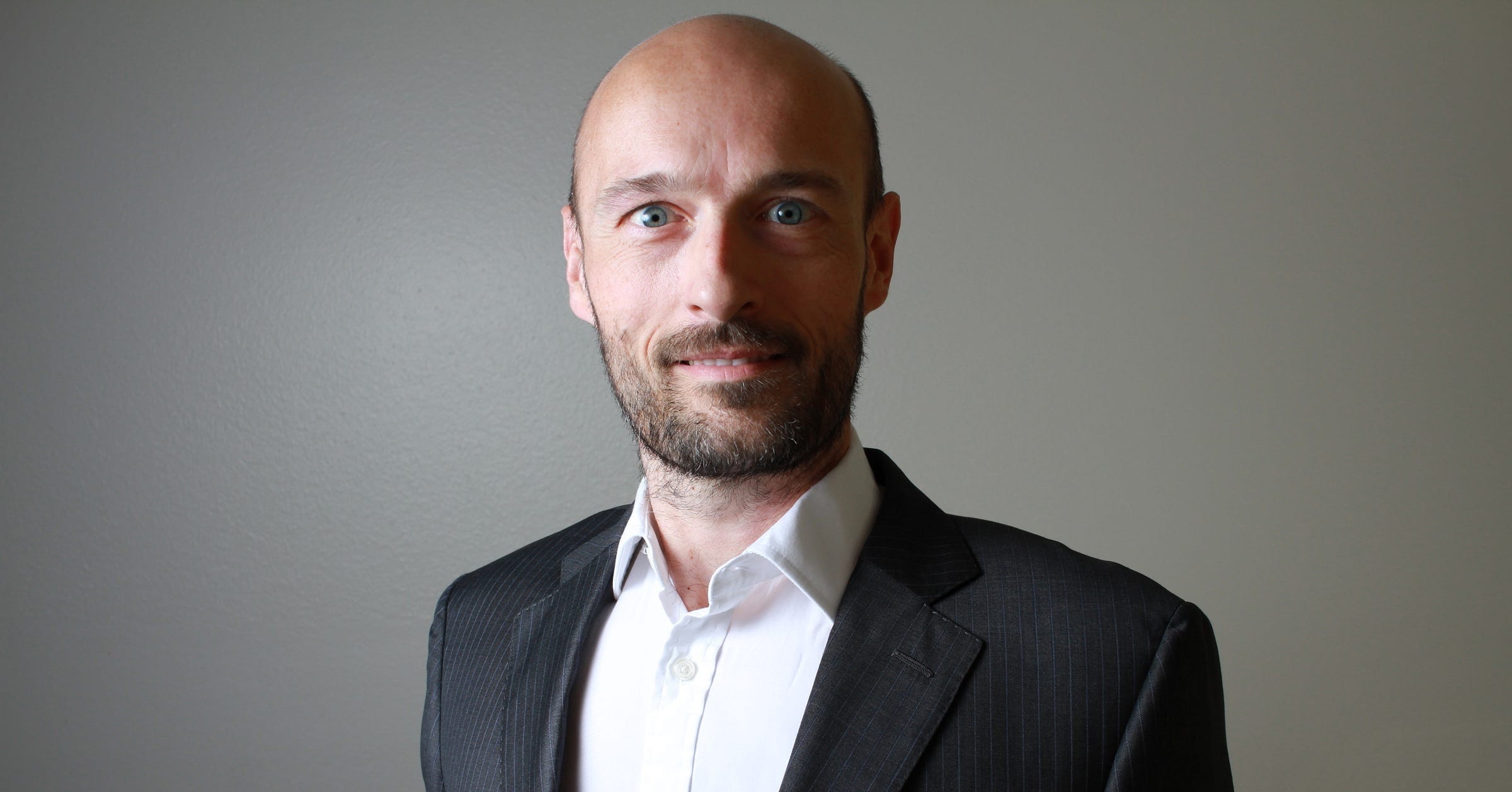
The financial world is one of the most puzzling, murky, and troubling of them all. Through that mire, Patrick has emerged as one of its most clear-speaking figures.
Beginning his finance career in 1997, Patrick has worked with Victor Niederhoffer (George Soros' former partner) and has been a portfolio manager at RBS, Millennium and Nomura. Today, however, he is best known for his wildly popular work on YouTube, where he breaks down ongoing financial developments in digestible terms, establishing himself as one of the most reliable predictors in the game. At the time of writing, it boasts over 1.2 million subscribers.
Why did we invite him on?
We’ve been fans of Patrick for some time, long admiring his uncanny ability to summarise and make entertaining the complex and the seismic. Hoping to have him on for some time, unfortunately, an interview forecasting financial trouble ahead has only become more timely and appropriate.
Still, at a time of ever-increasing economic anxiety, all we can do is know more. That’s what Patrick is for.
What did we learn?
Britain’s economy once was the envy of the world. A haven of trade, information-sharing and valuable resources, there was seemingly no end to our capabilities. Somewhere along the line, things changed. There’s an increasing feeling that we’re no longer a wealthy country, but a poor country attached to London. Outside of for the privileged few, life seems to only be getting worse. Increasing numbers of citizens on benefits, restrictions on those who do work, and a hiked-up cost-of-living that affects anyone without the means to ignore it.
Why are things so bad here? Is it just our imagination, or are the circumstances uniquely terrible?
”Everything bad that’s happened in the last 30 years has hit Britain worse. We were hit the hardest by the global financial crisis, the gas price hike after the Russian-Ukraine war… Everyone wants to say it’s politics or lazy people, but it’s not.”
The factors, Patrick explains, are multitude, but most present and perhaps most significantly is our inflation. The skyrocketing price of, well, everything is often dismissed as a natural reaction to interest rates. But looking around, the squeeze is much tighter than that alone can account for. What happened?
”Inflation exploded due to lockdowns. The global economy shut down in March 2020 and governments around the world had a choice - let everything tank (and there’s a free market argument for that) or, at this is what they did, leap over that huge hole in the economy. Bankrolling companies, stimulus checks… it’s all really expensive, and now there’s massive inflation. We have to pay the bill for what happened; you can’t ignore the fact that everyone got paid for two years when there was no economic activity.”
If this discomfort is the inevitable cost of paying of said bill, perhaps we can swallow that. But are we paying it?
”[Laughs] It’s on the credit card. That’s why I laugh when people get excited about the government cutting taxes. The tax only really happens when the government spends the money; we’ll either pay with it by being taxed today or we’re gonna pay in the future.”
”Pay in the future”, to an addict, is always the more appealing option, and a natural, predictable consequence of party politics. After all, why take the blame for decades of mishandling when you can contribute to it and let someone else take an even bigger hit later?
Exaggerated by the last decade of constant upheaval, short-termism is the thinking of the day in British parliament, and, as Patrick elucidates, the prime mover of these baffling policies.
”The only real incentives governments have is to kick the can down the road and hope someone else gets the blame for it. That doesn’t help the citizens of the country, and it’s even worse for the youngest citizens.”
Young people increasingly feel that the game is rigged against them, and it’s no surprise. Nowhere is it more radically apparent than the housing crisis. Long ago, the ladder was yanked up.
“It’s strange… you have sellers saying ‘My million pound house is now only worth 900,000!’ but then the buyers are responding ‘Yeah, but 900 is still too much!’ … [It could be fixed] but it’s so politically unpopular. If house prices in major cities went down to what they were in the late 1990s, there would be war in the streets. But the truth is, if they don’t… there will be war in the street!”
And there is no sign of things changing. In recent months, the youth vote has swung violently in favour of the Green Party - long-time joke, current election hopeful. Less shocking is the party’s policy agenda: doubling down. To fund their hugely expansive social programmes, party leader Zack Polanski has pledged to raise he national debt from 2.9 trillion to 5.2 trillion. Before we even get the chance to ask whether that’s a sensible solution, Patrick is shaking his head.
