


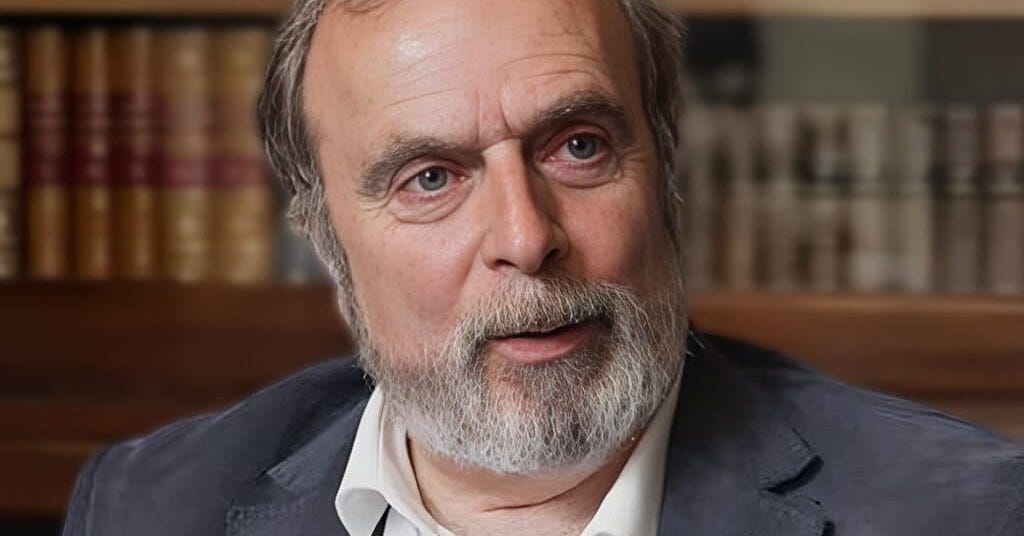
Peter Hitchens is one of Britain’s most beloved conservatives. In his career, he has contributed to the likes of The Spectator, the American Conservative, The Guardian, and the New Statesmen. Today, he writes primarily for the Mail On Sunday, while continuing to publish best-selling books.
Why did we invite him on?
”I’m in my mid-70s. I have little to gain in life, and not much longer to live; if it were possible for me to do something, I would. But people are drawn to more seductive voices, and I can’t offer seduction - it would be dishonest.”
Across the eight years we’ve been doing our show, Peter has firmly established himself as one of our favourite recurring guests. His firewood-dry wit and expert and unorthodox analysis always make for a brilliant conversation, and we thought it was high time we had him back.
Last time he joined us, we discussed the then-upcoming 2024 election. Peter shared a view that divided our listeners, and two years on, with so much having changed, we wanted to see if he stood by it. Beyond that, we also wanted to explore what he sees in our nation’s future, both the immediate and the distant. What came of it was typically fascinating.
What did we talk about?
”Last time I was on your show, I said that a vote for Reform was a vote for Labour, and that seems to me to have been proven true … How anyone thought putting a Labour government in office would solve the social, political, and economic conditions of the country, I just don’t know.”
With that last election now 24 months behind us, it’s hard to say with any certainty that Britain is in a better place. Those eight seasons have been characterised by riots, upheaval, division and decay. But with Starmer now bowing out, does Peter feel any more hopeful than he did before?
”The country is obviously finished. It’s just a question of how and when this will be apparent to everybody.”
To Peter, the theatrics of politics are just that - theatrics. The Conservatives are not conservative, Reform can’t reform, the Greens are too green, and Labour doesn’t work. As wide a gulf as there seems to be between these parties, they are all fundamentally operating on the same delusion. Unless radical change is implemented, it’s all just lawn-mowing at the foot of Krakatoa.
”Everything we do is based on an overestimation of how rich we are, and if the currency shrinks, you can’t keep up that pretence anymore - the government spending will [have to] shrink. We have also trashed the talent pool of this country; we have people at the elite level who are unable to think properly. We have a transport system that doesn’t work and is falling to pieces. We have a criminal justice system that might as well have been abducted by aliens … These all contribute to a feeling that nothing works. It’s as though someone has cursed us.”
So far, Peter has given us very little reason to feel optimistic. What he describes isn’t a country in decline but a declined country that can’t see itself. Britain has run off the cliff, but it hasn’t looked down. Is there anything we can do to change course?
”We need someone to tell the people that things have to change, and they will be difficult. There will be fewer of the things we have gotten used to, and that’s a hard thing to accept - it doesn’t tend to win elections.”
Peter explains that if we don’t face things now, we’ll be forced to later, when they’ll be much, much worse. He warns of cycles of hyperinflation and poverty, “the likes of which we never thought we’d see”. With poverty comes division. Under such circumstances, political extremism is inevitable. In a sense, it’s already here.
”You’re already seeing that. People are willing to listen now to people they ought not to listen to.”
Who is Peter talking about here?
”[Sighs] You can guess. It’s not even worth raising the names. There are people now on the edges of politics who are becoming very influential, and they’re very worrying. I don’t want to help them now by naming them.”
History, it’s been said, comes in cycles. The collapse is as predictable as the rise, and the rise is as inevitable as the collapse. If the country is “finished”, it isn’t really; something will come in the wake of it. Perhaps something better. That rejuvenation may fall outside a 10-year-plan, but, as Konstantin asserts, if things turn bad enough, a revival is sure to come. There is only so much the average person will put up with. So far, they’ve allowed themselves to be squeezed, but we’re already seeing their teeth.
Nations that suffered much worse fates have recovered. Former communist states, former military dictatorships… even those who participated in the Second World War. Is that something to comfort in?
”That’s rather Marxist of you.”
