


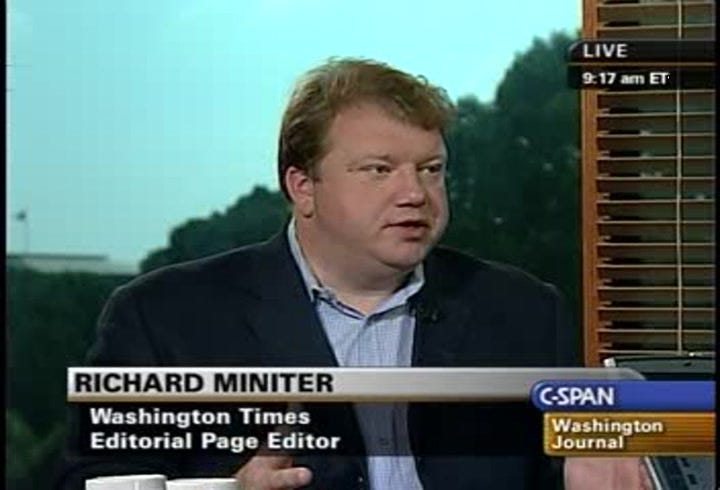
For over 30 years, Richard Miniter has been one of the most respected names in investigative journalism.
His career spans several prestigious publications, having contributed to the likes of The New York Times, The Washington Post, The Wall Street Journal, The Atlantic Monthly, Newsweek, The New Republic, National Review, and Reader’s Digest, his investigative work earning him accolades from the likes of the National Press Club and the International Consortium of Investigative Journalists.
Today, Richard continues to provide insights on global security issues and write best-selling books on geopolitics from a conservative perspective.
Why did we invite him on?
Richard may have only joined us as a guest for the first time last year, but even in just that short window, he has become one of our favourite regulars. His first appearance gifted us the most incredible explanation of America we’ve ever had, while his second explored the rich tapestry of journalism’s history, and was arguably even more fascinating.
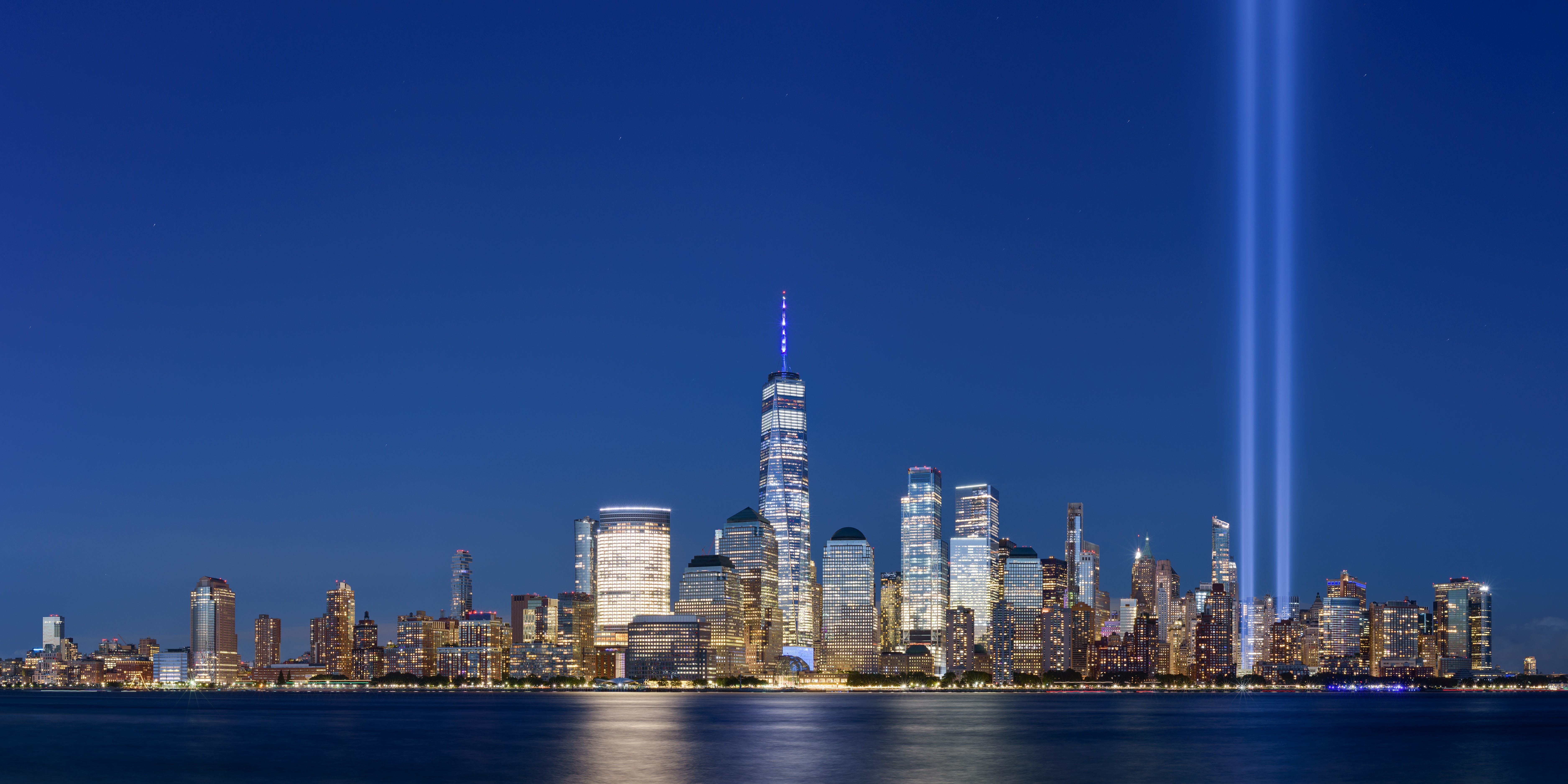
This time, we’re having him on for a very specific reason: tomorrow marks the 25th anniversary of 9/11. It’s one of the most dissected and debated events in world history, yet even a quarter-century on, new developments in the story continue to come to light, and the stranger-than-fiction reality only becomes more difficult to believe.
As time goes by, an increasing percentage of our audience - and indeed the world - will only know about the worst terror attack in global history through anecdotes, data, and legend. Given that, it’s easy to go numb to the enormity and horror of the occasion. For this anniversary, we wanted to rectify that.
Richard’s unorthodox knack for explanation makes him an ideal guest to tackle this most complex of subjects. The pressure was on, our expectations were high. Even we were blown away by the conversation that unfurled.
What did we talk about?
When one takes more than a second to consider what actually happened on that day, it’s difficult to wrap the mind around it. Commercial airliners, hijacked by weaponed insurgents, commandeered and turned into missiles, ploughed into the two tallest buildings in the Western world, killing thousands. Another crashed into the Pentagon. A fourth, until it is intercepted from within, is headed for Washington D.C.
The level of horror, destruction, and mayhem this crack team of fanatics brought upon America that day, and for years to come, is, frankly, astonishing. What brings a person to do it?
”People become terrorists because it solves an important problem in their life. Either a lack of meaning, or isolation. They need people, or they need purpose - terrorism gives you a purpose.”
Meaning and companionship are innate human needs. Countless people go without them, but very few resort to violence of any kind, let alone something of this scale. As Richard explains, the hijackers were not typical by any stretch of the imagination. They were in a shared revery; wholly dedicated to brutality. In fact, they often used one another to rehearse.
”The FBI put together a complete timeline for all of the hijackers. From the moment they landed in the United States to the moment they died. To do that, they put together a wealth of data: ATM receipts, restaurant bills, witness accounts, security cameras - it’s an incredible document. And in that, it reveals they did scenario role-playing. They practised the attack on each other.”
It took months to piece together the months leading up to September 11th. Hundreds of federal employees working on nothing else, tracing the movements of every relevant character, until eventually a picture started to emerge. Once it did, they realised something horrifying: these ‘martyrs’ were barely hiding their intent.
”At flight school, quite chillingly, they said they didn’t need to take off or land; they just needed to be able to control the plane in the air.”
So, how did they manage to go undetected? Why weren’t they stopped long before?
”They took advantage of existing American weaknesses. The woman who gave [one of the hijackers] his ticket later testified that she thought he was a terrorist, but didn’t want to discriminate or be unwelcoming. The hijackers knew this, and they exploited it.”
There are still elements of the story we don’t know, and likely never will. In those gaps, myths proliferate. The average person probably thinks they know the whole narrative of 9/11, from those responsible, to how they got there, to the very weapons they used to assume control of the jet.
This, Richard warns us, is tricky. A frantic call for answers in the days following the day induced a desperate attempt to respond to all questions, even if the story wasn’t entirely true. Just to use one example - we still don’t quite know how the hijackers were able to hijack the flight.
