


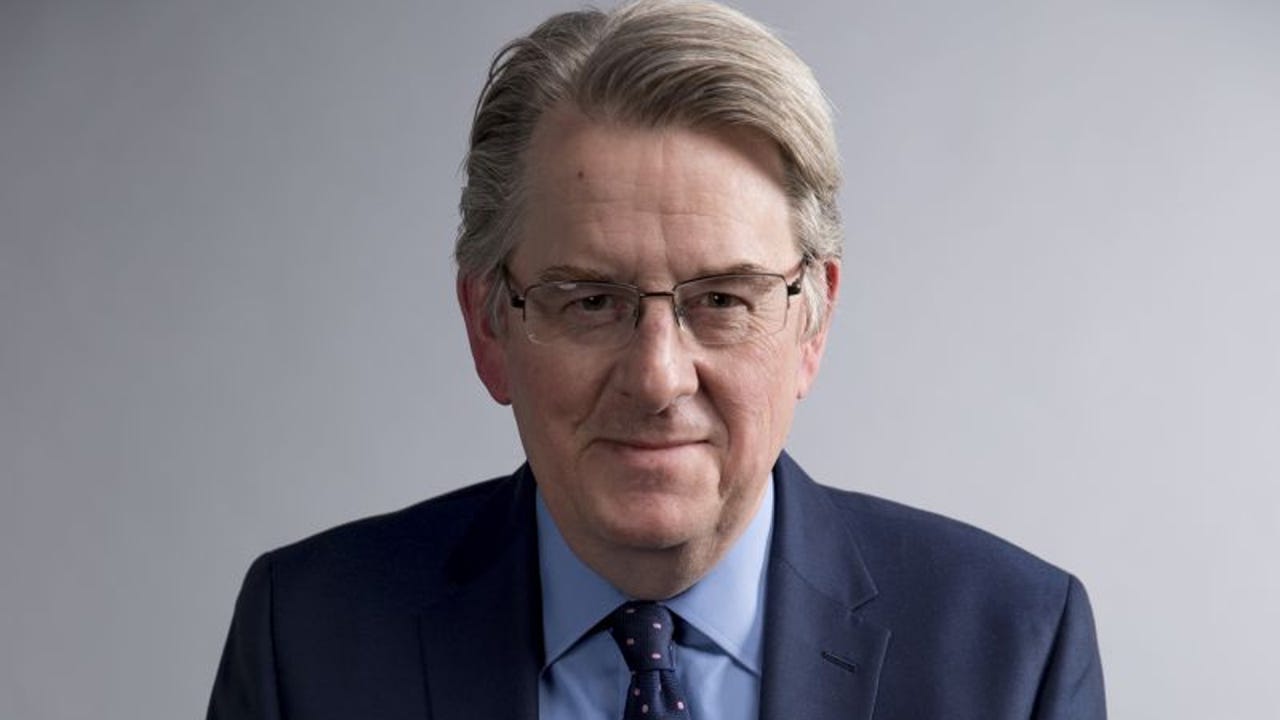
Even if you don’t know Robert Hardman, you certainly know his work.
As well as working as a royal correspondent for the Daily Telegraph and writing for the Daily Mail and Spectator, Robert Hardman is a fixture of Britain’s state occasions. If you watched the BBC’s coverage of King Charles III’s coronation, or the 70th anniversary of D-Day, or the funerals of Prince Philip and Queen Elizabeth II, you’ll have heard his voice.
His latest book - Elizabeth II: In Private. In Public. The Inside Story. - was published earlier this year to widespread acclaim.
Why did we invite him on?
The monarchy is, quietly, one of the most divisive subjects in contemporary Britain.
To its defenders, the chain of royals ties us back to a thousand-year history, providing an invisible stability and identity to a nation facing crisis. To small-r republicans, it’s an institution that entrenches our society with inequality, corruption, and magical thinking; a direct, expensive contradiction to the principles of the Magna Carta.
We invited Robert to make the case in favour. As one of the world’s leading experts on the subject, he was a natural choice, and it made for a fascinating conversation.
What did we learn?
Francis and Konstantin concede from the off - neither understand why it’s a big deal either way. Whether we have a monarchy or not, does it really matter? If it were to go away, short of the odd state funeral going amiss, would we even notice? To Robert, the answer is obvious.
”At every level, the monarchy plays a role. They are the thread that weaves through it all.”
Robert’s dedicated his life to researching and following our royal family. Yet, even he didn’t quite realise the profundity of their influence until 2022, when Queen Elizabeth II - Britain’s longest-reigning monarch ever - passed away.
”It was an extraordinary week. We’d just changed our head of government [Rishi Sunak replaced Liz Truss as PM], and we were also changing our head of state. In most countries, when you change [either], there is upheaval. We changed both in a week, and not a shot was fired, or an angry word said. People just carried on. That summed up the heft and stability the family provides. It’s the bedrock. People don’t know it’s there.”
Across the last thousand years, especially in the last century, we’ve seen the direct power of the Royals dip considerably. At one time, the monarch was seen to be anointed by God himself, and they enjoyed all the power such an anointment entails. They could declare and lead wars without permission from anyone else, raise taxes at will, and change laws for any reason and at any time. Elizabeth II oversaw a mass reduction in the scope of the empire, but even before her, the grip was loosening. As time’s gone by, we’ve seen that role reduce to, seemingly, cutting ribbons and shaking hands. It hardly seems worth keeping.
This, Robert suggests, is a misunderstanding - the power has changed, not diminished.
”Their power is what we call ‘soft power’ [the ability to shape behaviour and beliefs without force]. I interviewed Professor Joseph Nye of Harvard University, the man who codified and defined ‘soft power’, and he said Britain has two tools of it that are completely inexorable - the English language, and the Royal Family. It gives [us] enormous influence, and places us at the top of the ‘soft power’ index.”
Again, this was perhaps best captured by the relationships Elizabeth II enjoyed with international figures of consequence. For over 70 years, she liaised with the most powerful people on the planet, winning friends across all political divides.
Even Donald Trump - famously fickle - demonstrated reverence for her. It was only that reverence that gave Robert the chance to speak to the President.
