


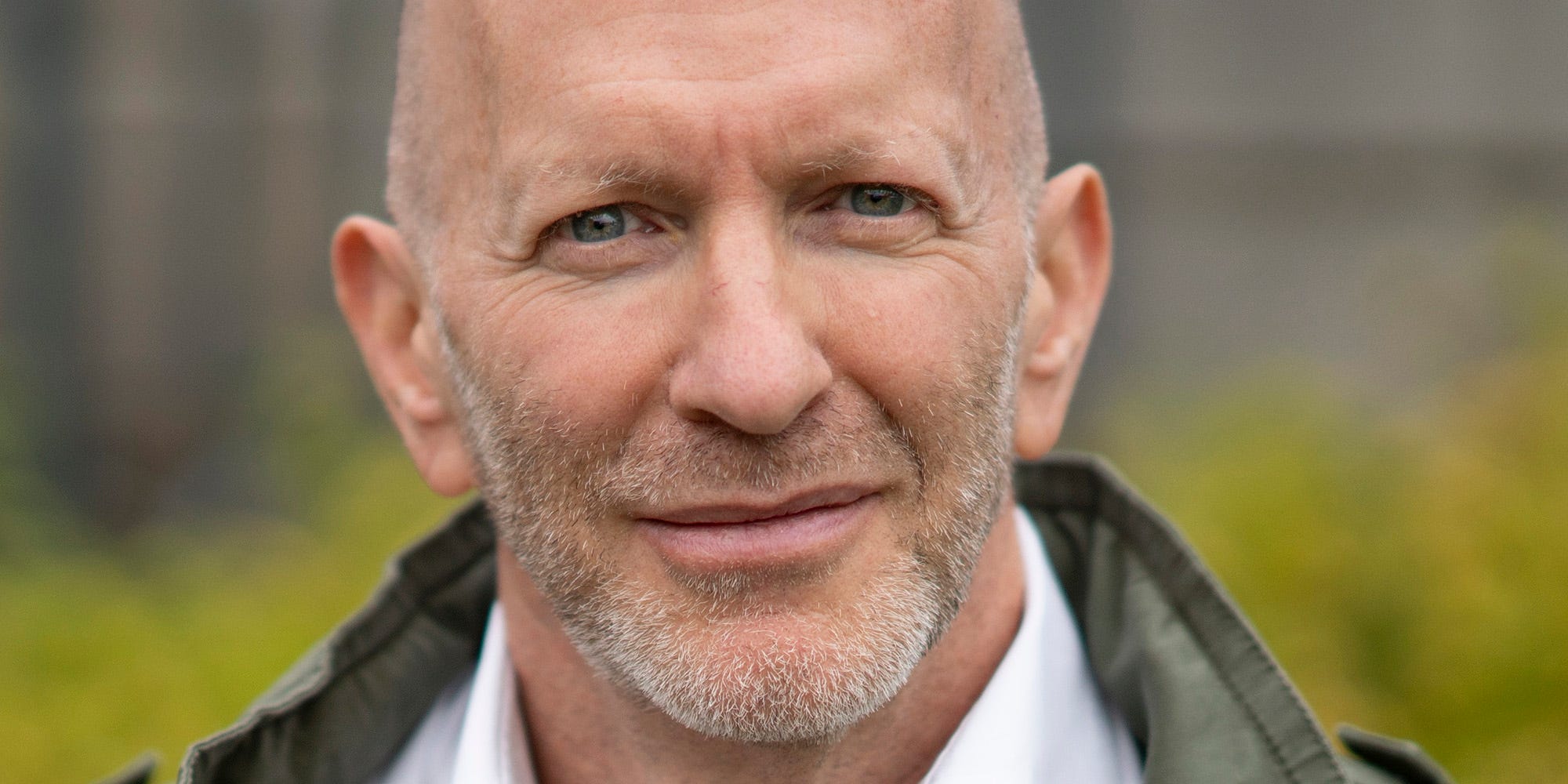
Rising to fame in 2001 with the release of his breakout success Catherine the Great & Potemkin, Simon Sebag Montefiore has spent the 21st century enjoying a career as one of Britain’s most respected historians.
His catalogue of books, including history-buff mainstays Jerusalem: The Biography and 2016’s The Romanovs, has earned him awards from all of the world, as well as countless nominations. Elsewhere, he is a Fellow of the Royal Society of Literature, as well as a Visiting Professor of Humanities at the University of Buckingham.
His latest work - The Cauldron: The Making of the Modern Middle East - is out August 25th, 2026.
Why did we invite him on?
Simon’s bibliography speaks for itself, and we’ve been avid readers of his for years. When we received word that his next book would be covering ‘the making of the modern Middle East’ - a subject which dominates headlines week-in-week-out, we knew it was time to finally host him.
It sounds like well-trodden ground. It isn’t. Perhaps naturally, almost every book available on the topic is charged politically one way or the other. Some are effervescent and breathless tributes to Israel, others are vicious condemnations of ancient colonialism. Both have their place, but neither tell the whole story.
Instead, Simon brings a fresh perspective to events, charting a history that, until the release of his book, has gone broadly underdiscussed in the literature. We wanted him to share some of that, with us and with you. This is that conversation.
What did we talk about?
”I didn’t want to write a neo-Marxist book of decolonialisation, but I also didn’t want to write a Zionist book. I wanted to do something that was as balanced as I could make it, without ideology.”
History of the Middle East stretches back as far as civilisation does. Where does one decide to start?
Ultimately, Simon is interested in the first dominoes that shaped what life in the region looks like today. To do that, he traces back to the early part of the 20th century; the fall of the Ottoman Empire.
It’s easy to forget just how imperious the global state in question was. Lasting over 600 years (1299 to 1922), and spanning parts of Europe, Asia, and Africa, the Ottomans ruled over huge swathes and had immense influence on international trade and relations. Despite its clear historical significance, the Empire is somewhat misunderstood. Often viewed as a visage of tolerance in an intolerant time. Simon is keen to correct the record.
”The myth of ‘the great tolerance’ is something you read about quite often. People say that the Middle East was once tolerant, until it was destroyed by America, or by nationalism. And that’s true - up to a point. The Ottoman Empire, in the end, was something quite different to the way it had started.”
Whether the Empire became intolerant as a reaction to its ailing health or it crumbled as a result of its intolerance is a topic still hotly contested today. What is not debatable, however, is the staggering and callous brutality they exerted over their citizenry.
”The Ottoman Empire, far from being tolerant, ended up under the control of the Three Pashas [a dictatorial triumvirate that de facto ruled the empire the 1913 coup d'état until the end of World War I in 1918]. They were a fascist, eugenecist, Turkish, Islamic supremacy. They massacred 1.1 million Armenians, but they also committed now-forgotten genocides. The starving of Christians, the massacres of Greeks…”
One can look back now and see that their demise was inevitable. At the time, that wasn’t so clear. If the Ottomans were ever to fall, it would take an outside influence. In World War I, Britain saw an opportunity.
