


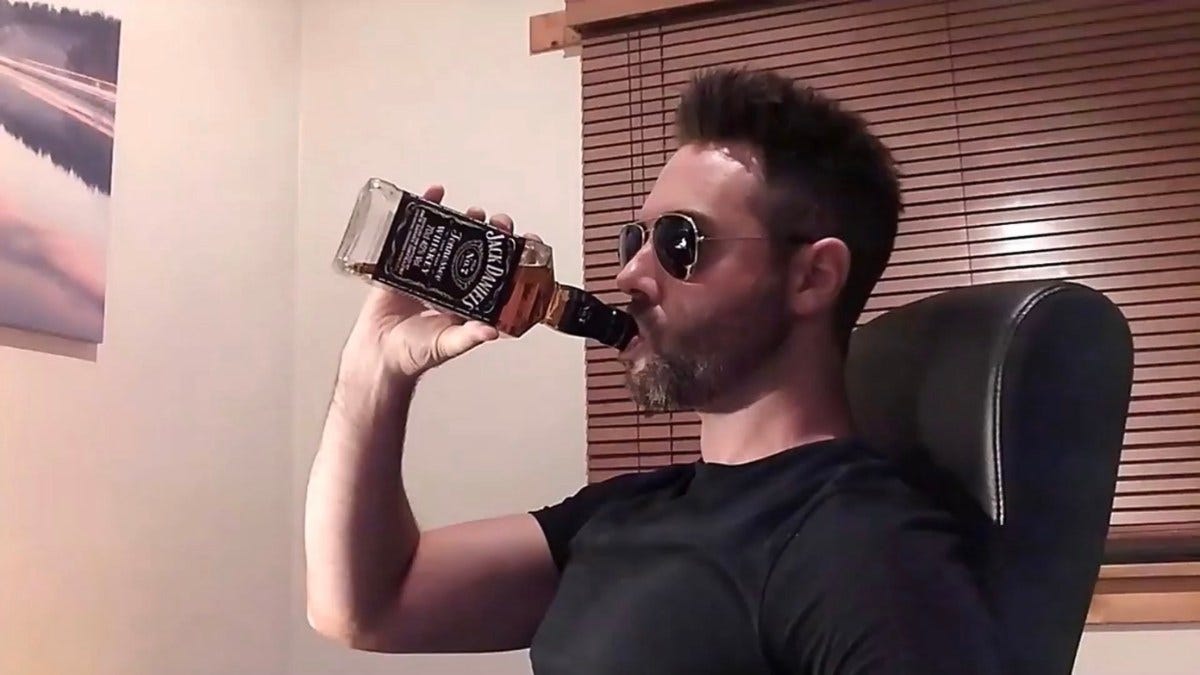
Every generation gets the film critic it deserves, and Will Jordan is his.
Tackling Hollywood’s fad-fuelled obsession with identity politics, wokeism, and progressive ideology, the Critical Drinker has, in the last decade, has grown from an irreverent comedy character to one of the most widely-listened-to media analysts in the world.
Today, his channel boasts 2.4 million subscribers and just shy of a billion combined views.
Why did we invite him on?
We’ve had Will on the show twice before: first to discuss how the movie industry was poisoned by politics, and later to consider whether the era of hyper-liberalism in mass entertainment was behind us.
This time, we wanted an update on the current state of cinema. Have things improved, or gotten worse? More importantly, what does the future have in store?
What did we talk about?
Naturally, the conversation opens with the cinematic event of the year: Christopher Nolan’s recent adaptation of The Odyssey. It’s been out only a fortnight, yet already it’s a contender for the decade’s most divisive blockbuster. While acclaimed by critics as a masterpiece and earning hundreds of millions at the global box office, the film has had, to put it mildly, its share of detractors. Not mere internet trolls either; Elon Musk has floated the idea of privately funding a more ‘authentic’ adaptation with Mel Gibson at the helm, while famed translator Emily Wilson described the modern screenplay as work she would be “ashamed” of.
Where did the Critical Drinker land?
”Meh.”
People watched the review thinking I’d hate it, but I was just mixed on it. There are technically brilliant aspects, and Christopher Nolan’s a very competent director. My only real issue was the lack of emotional connection, which is common for [Nolan] movies at this point.”
That’s more or less how we felt. We seem to be the only three that did. So why is the film so contentious? An Oscar-winning director with an iconic catalogue, working with a cast of stars, to depict the West’s most eternal story. It’s hard to quantify a more sure-fire recipe for success. How did it attract such ire months before it was even seen?
”It’s the casting choices. When it was first announced, everyone was pretty enthusiastic, myself included … I was sure he’d do a great job. Then the first trailer comes out… You find out Lupita N’yongo is playing Helen Of Troy - quite a departure from what we know Helen of Troy to be… and that Elliot Page is going to be in it. It generated a crazy pushback online. I haven’t seen anything like it since [2023’s] Snow White.”
The film, contrary to what many online pundits would have had you believe, was neither especially woke nor anti-woke. It wasn’t a perfect film, but it largely managed to avoid the unsavoury trappings of either. Are we seeing some kind of ‘woke PTSD’ whereby everything is viewed through the lens of friend-and-enemy? Is it the same reason that every film which isn’t blatant propaganda is welcomed as a return to classic Hollywood?
How has Hollywood painted itself into such a corner?
”They looked at the internet and thought the world was a big, progressive echo chamber. So they made films for that world, and they’re finally waking up to the fact it didn’t work. It took tens of billions in lost revenue, but they got there in the end. It’s just a shame Star Trek, Star Wars, Indiana Jones, or whatever else, have been casualties of that trend.”
It’s why Will, regardless of its faults, welcomes bold films like the Odyssey. Non-franchise, serious films that make requests of their viewer. That require attention and patience.
”I would rather watch [The Odyssey] a hundred times over than just another piece of superhero slop, or whatever franchise like Star Wars or Jurassic Park are recycling for the dozenth time. I’m glad to see it succeed over films of lesser artistic merit.”
Here, Will is speaking to what looked for a while to be a terminal trend: the ever-diminishing interest in art in entertainment. Commerce is an inexorable component of cinema, but for much of the 21st century, it’s felt like the only thing that matters. Regurgitated franchises with aged-out characters and reference-heavy dialogue, churned out, swallowed, and regurgitated again. It’s become so tedious, even the most popular franchises in the history of entertainment are struggling to turn a profit.
”The demand for interesting films is still there. Look at Obsession - with horror films, all you need is a good idea. A good hook to get people. You don’t need a huge budget for special effects - you just need a good premise, a solid script, and some good performances. That movie cost $750,000 to make, and it’s sitting at $460 million. It’s on track to be the most profitable film of all time, relative to budget. It can still be done.”
And it can still be done on the largest of scales. For all the blockbuster exhaustion we three share, this year also saw the release of one of the best in some time…
