


Joanna Moncrieff is Professor of Critical and Social Psychiatry at University College London, and a consultant psychiatrist for the NHS. She is a founder member and co-chairperson of the Critical Psychiatry Network, an influential network of psychiatrists and other doctors. She has written for The Guardian, Daily Mail, The Conversation, Literary Review, was profiled in The Spectator and has been interviewed for The Guardian’s Science Weekly podcast and the Evening Standard’s Tech and Science Daily, among others.
Her new book, Chemically Imbalanced, tells the story of a scientific myth and its consequences. It traces the history of the serotonin theory of depression from its development in the 1960s, through its inculcation into popular culture in the 1990s, to the recent revelations that it is not supported by evidence. For decades, the public has been told that depression is caused by a chemical imbalance and that antidepressants work by targeting this mechanism. Millions of people have decided to take antidepressants based on this information.
Tomorrow, she is coming on the show to discuss the effectiveness of antidepressants, depression, anxiety, their causes and treatments.
Comment your questions below.
Qualia Stem Cell: Built for People Who Want Proof, Not Promises
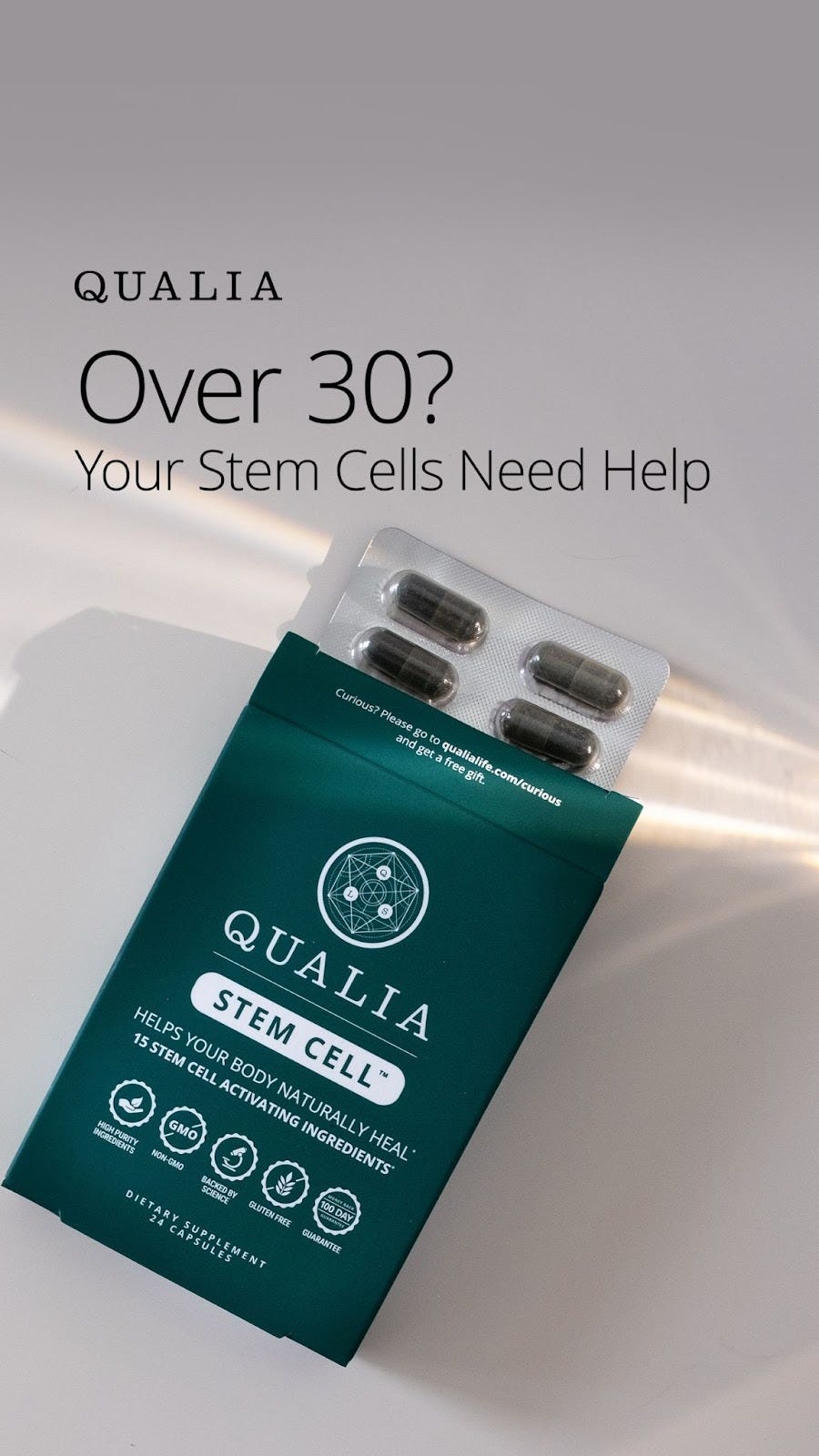
There’s a lot of noise out there when it comes to health. Whether it’s miracle cures and trendy supplements, they only deliver empty promises. Qualia Stem Cell isn’t one of them.
It’s a rigorously formulated blend of nutrients designed to activate thriving stem cell activity, your body’s natural repair system to help heal, repair, and renew, so you can age better.
If you’re looking for something rooted in research that values how your body naturally operates, Qualia Stem Cell is for you.
Take control of your recovery. SHOP NOW for up to 50% off, and use code TRIG15 for an extra 15% at checkout.
Should teenagers be taking all these medications for adhd? I worry about taking something during these developing years. Shouldn't they get help, but talk about the issues and giving problem solving strategies?
We often talk about placebo effects in medicine, but how seriously should psychiatry take the nocebo effect, especially when side effects and long-term dependency are framed in certain ways? If the chemical imbalance narrative was overstated, could it have functioned as a kind of nocebo, reinforcing people’s sense that their brains are defective and biologically broken?